
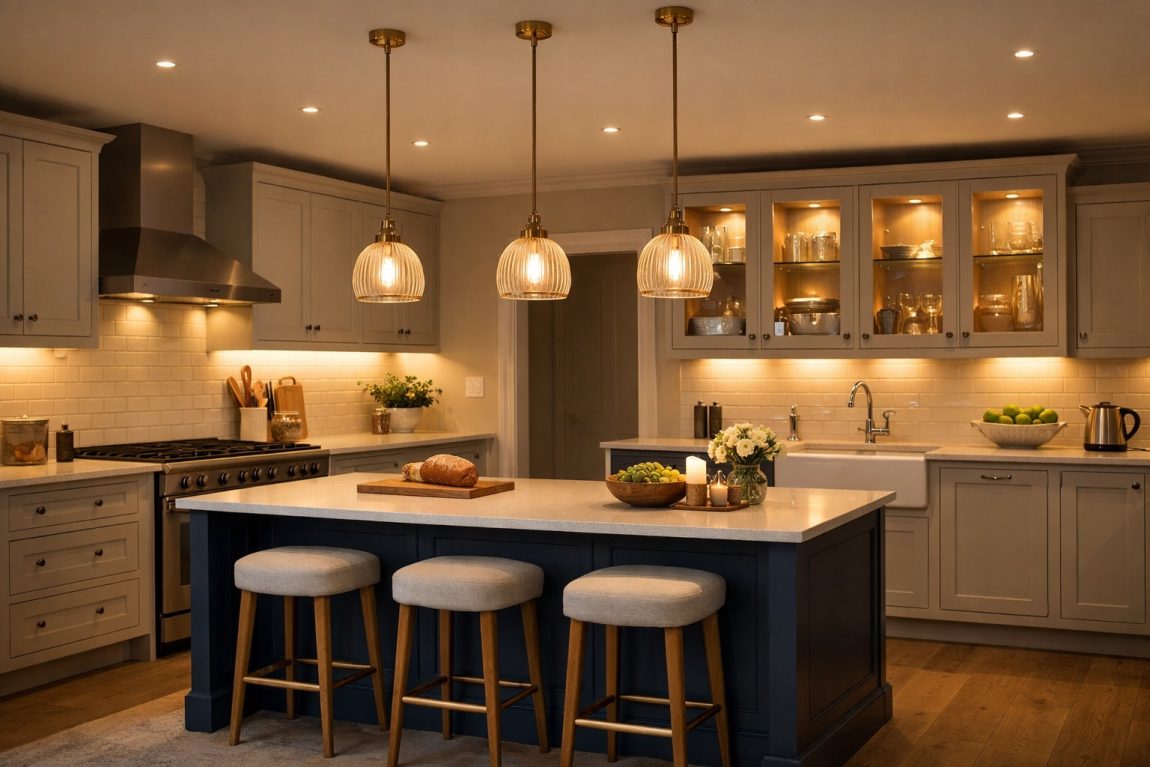
Designing a kitchen in 2026 isn’t just about choosing the right oversized pendant; it’s about meeting strict building codes that ensure your “heart of the home” is safe, energy-efficient, and legally compliant.
1. Part P Compliance: Why You Need a Pro
In the UK, the kitchen is classified as a “special location” under Part P of the Building Regulations.
- The Rule: Any new electrical circuit or significant alteration in a kitchen is notifiable to Local Authority Building Control.
- The 2026 Update: As of late 2025, Part P qualifications are no longer a “standalone” shortcut. Work must be signed off by a registered competent person (e.g., NICEIC or NAPIT) or inspected by building control.
- The Risk: Failing to get a Compliance Certificate will cause major headaches when you try to sell your home.
2. Lux Levels: The “Right to Sight”
Regulations aren’t just about wires; they are about functional safety. You cannot safely chop vegetables in the dark. 2026 design standards recommend specific Lux levels (the measure of light on a surface):
- Task Areas (Worktops/Hobs): Minimum 500 Lux. This is usually achieved through high-output LED strips under wall cabinets.
- General Dining/Ambient: 150–200 Lux. Soft enough for eating, but bright enough for movement.
- Safety Tip: Ensure task lighting is positioned in front of you (under cabinets) rather than behind you (ceiling spots), to prevent casting shadows over your knife work.
3. Energy Efficiency & LED Standards
2026 marks a major push for Full-Time Energy Efficiency.
- Smart Standby: New standards require that smart bulbs and “tunable white” drivers consume minimal power when in “standby” mode.
- Efficacy: High-efficiency LEDs are now mandatory for new builds. In 2026, many regions require lighting to provide at least 75–100 lumens per watt to meet climate goals.
4. Circuit Loading & Diversity
With the rise of 2026 “super-kitchens” (featuring induction hobs, wine fridges, and boiling water taps), your lighting circuit must be isolated.
- Dedicated Zones: Best practice now dictates at least three independent lighting zones (Task, Ambient, and Accent) on a 6A RCBO. This ensures that if a bulb pops in your “mood” lighting, you aren’t plunged into darkness while using the stove.
Summary Checklist for Homeowners:
- Hire a Registered Electrician: Ensure they can self-certify for Part P.
- Request Two Certificates: You need an Electrical Installation Certificate (EIC) when works are complete
- Check IP Ratings: If your lighting is near a sink, it should be IP44 rated to handle splashes.
- Verify Dimmer Compatibility: 2026 LED drivers are sensitive; ensure your dimmer switch is “trailing-edge” compatible to avoid flickering
Call our Kitchen wiring specialist. 01225 729005