
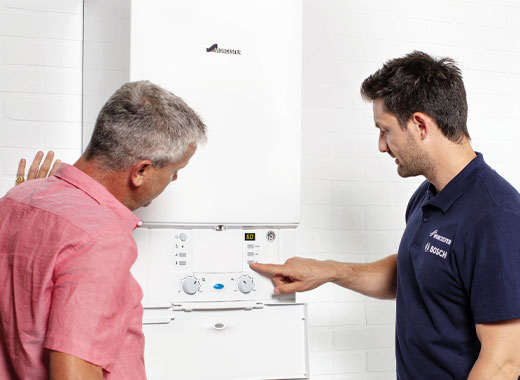
Some Useful information for Home owners
Replacing your boiler is one of the most important home investments you’ll make. A modern, high-efficiency system can reduce your energy bills by up to 30% and significantly lower your home’s carbon footprint.
In this 2026 guide, we break down everything you need to know about boiler types, sizing, costs, and the latest hydrogen-ready technology.
1. What Type of Boiler Do I Need?
Choosing the right system depends on your hot water usage and the number of bathrooms in your home.
Combi Boilers (Combination)
The most popular choice in the UK. They heat water directly from the mains, meaning no bulky storage tanks.
- Best for: Small to medium homes (1–2 bathrooms).
- Pros: Space-saving, high efficiency, and instant hot water.
System Boilers
These require a cylinder to store hot water but do not need a tank in the loft.
- Best for: Larger homes with high hot water demand.
- Pros: Can supply multiple showers simultaneously without a drop in pressure.
Conventional Boilers (Regular)
Traditional systems that use both a storage cylinder and a cold-water tank in the attic.
- Best for: Older homes with traditional radiators that cannot handle high water pressure.
2. Boiler Sizing: What kW Output is Right?
Sizing” refers to the heating power (kilowatts). Choosing the correct kW ensures your home stays warm without wasting energy.
| Home Size | Number of Radiators | Recommended kW |
| Flat / Small House | 1–10 Radiators | 24–27 kW |
| Medium Detached | 10–15 Radiators | 28–34 kW |
| Large Family Home | 15–20+ Radiators | 35–42 kW |
3. The Shift to Greener Heating
With the 2026 energy standards, homeowners are increasingly looking for “future-proof” options.
- Hydrogen-Ready Boilers: Most new gas boilers are now “20% Hydrogen Ready,” meaning they can run on a blend of natural gas and hydrogen to reduce emissions.
- Hybrid Systems: Many homeowners are now pairing a combi boiler with an Air Source Heat Pump to maximize efficiency during shoulder seasons.
- A-Rated Efficiency: Ensure your new unit has an ErP rating of at least 92% to maximize your ROI.
4. How Much Does a New Boiler Cost in 2026?
The total cost typically includes the unit itself plus professional installation by a Gas Safe Registered engineer.
- Budget Range: £1,800 – £2,500 (Basic combi swap)
- Mid-Range: £2,500 – £3,500 (High-efficiency brand with 10-year warranty)
- Premium: £3,500+ (Full system conversion or large-capacity units)
5. Frequently Asked Questions (FAQ)
How long does a boiler installation take?
A straightforward “like-for-like” swap usually takes 1 day. If you are converting from a conventional system to a combi, expect 2–3 days of work.
Is it worth replacing a 10-year-old boiler?
Yes. Modern A-rated condensing boilers are significantly more efficient than older models. If your current boiler is G-rated, you could save hundreds of pounds annually on fuel bills.
What is the best boiler brand in 2026?
Brands like Worcester Bosch, Viessmann, and Vaillant consistently rank highest for reliability and parts availability.
Expert Tip: Always ask your installer for a Power Flush before fitting the new unit. This clears out “sludge” from your old radiators, preventing your new boiler from clogging up in its first year.