
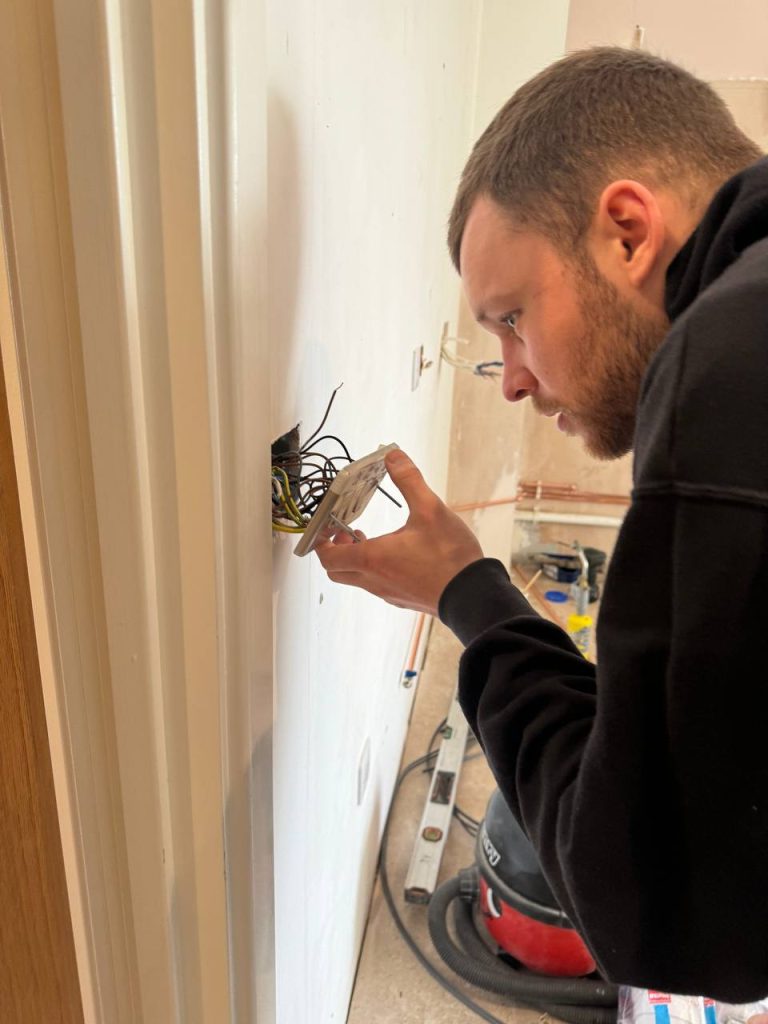
If you’re planning a kitchen renovation, one of the most important upgrades to consider is a kitchen electrical rewire. Modern kitchens rely on multiple appliances, lighting systems, and power outlets, making safe and efficient wiring essential. Rewiring your kitchen ensures your electrical system can handle the load while meeting current UK safety regulations.
In this guide, we explain why kitchen rewiring is important, what’s involved, and how to plan your electrical layout for maximum safety and convenience.
Why a Kitchen Electrical Rewire is Important
Kitchens are one of the most demanding rooms in any home when it comes to electricity. Appliances such as ovens, induction hobs, dishwashers, microwaves, kettles, and refrigerators all require reliable power.
Older wiring systems may not be designed to handle the electrical demand of modern kitchens. This can lead to:
- Overloaded circuits
- Frequent breaker trips
- Increased risk of electrical faults or fire
- Limited power outlets for appliances
A professional kitchen rewire upgrades the wiring, circuits, and protection devices so your kitchen can safely support all your appliances.
Signs Your Kitchen May Need Rewiring
If you live in an older property, your kitchen wiring may need upgrading. Some common warning signs include:
- Limited or poorly placed plug sockets
- Frequent tripping of circuit breakers
- Flickering or dim kitchen lights
- Warm or discoloured sockets
- Use of extension leads for multiple appliances
If your property is more than 20–30 years old and the kitchen has never been updated, rewiring is often recommended during renovation.
What is Included in a Kitchen Rewire?
A full kitchen electrical rewire typically includes several key upgrades designed to improve safety, efficiency, and convenience.
1. New Electrical Circuits
High-powered appliances require dedicated circuits. During a rewire, electricians may install circuits for:
- Electric ovens
- Induction or ceramic hobs
- Dishwashers
- Washing machines
- Integrated microwaves
This prevents circuits from becoming overloaded.
2. Worktop Socket Installation
Modern kitchens require multiple accessible sockets for small appliances such as kettles, coffee machines, blenders, and toasters.
Sockets are usually installed above worktops and may include USB outlets for charging devices.
3. Kitchen Lighting Upgrades
Lighting plays a key role in both functionality and design. A rewire often includes:
- LED ceiling spotlights
- Under-cabinet task lighting
- Pendant lighting over islands
- LED strip lighting
These lighting upgrades improve visibility and create a modern kitchen atmosphere.
4. Consumer Unit Protection
Modern electrical installations require proper circuit protection. During a kitchen rewire, circuits are typically protected with RCDs or RCBOs in the consumer unit to ensure electrical safety.
5. Wiring for Future Appliances
Experienced electricians often plan wiring routes for potential future appliances or upgrades, reducing the need for additional electrical work later.
Planning Your Kitchen Electrical Layout
Good planning is essential before starting a kitchen rewire. Your electrician will need to know the final kitchen layout, including:
- Appliance positions
- Cabinet layout
- Sink and hob locations
- Kitchen island placement
- Lighting preferences
This allows sockets, switches, and circuits to be installed in the most practical and safe locations.
For example:
- Sockets should be positioned away from sinks and cooking areas
- Switches should be easily accessible
- Worktops should have enough outlets for everyday appliances
UK Electrical Regulations for Kitchens
In the UK, kitchen electrical work must comply with Building Regulations Part P and the latest edition of BS 7671 Wiring Regulations.
These rules ensure that electrical installations are safe and correctly tested. After completing the work, a qualified electrician should provide:
- Electrical Installation Certificate (EIC)
- Building regulations compliance certificate (if applicable)
Hiring a certified electrician ensures the work meets legal and safety requirements.
Final Thoughts
A kitchen electrical rewire is a key part of any kitchen renovation project. Upgrading your wiring improves safety, supports modern appliances, and ensures your kitchen meets current UK electrical regulations.
With careful planning and a qualified electrician, a professionally rewired kitchen will provide reliable power, better lighting, and improved convenience for years to come.
Call Ace Energy for a no obligation quote to rewire your kitchen 01225 729005